

Wood Dining Room Sets: Everything You Need to Know
Posted by Posted by eFurnitureHouse on 15th Jul 2026
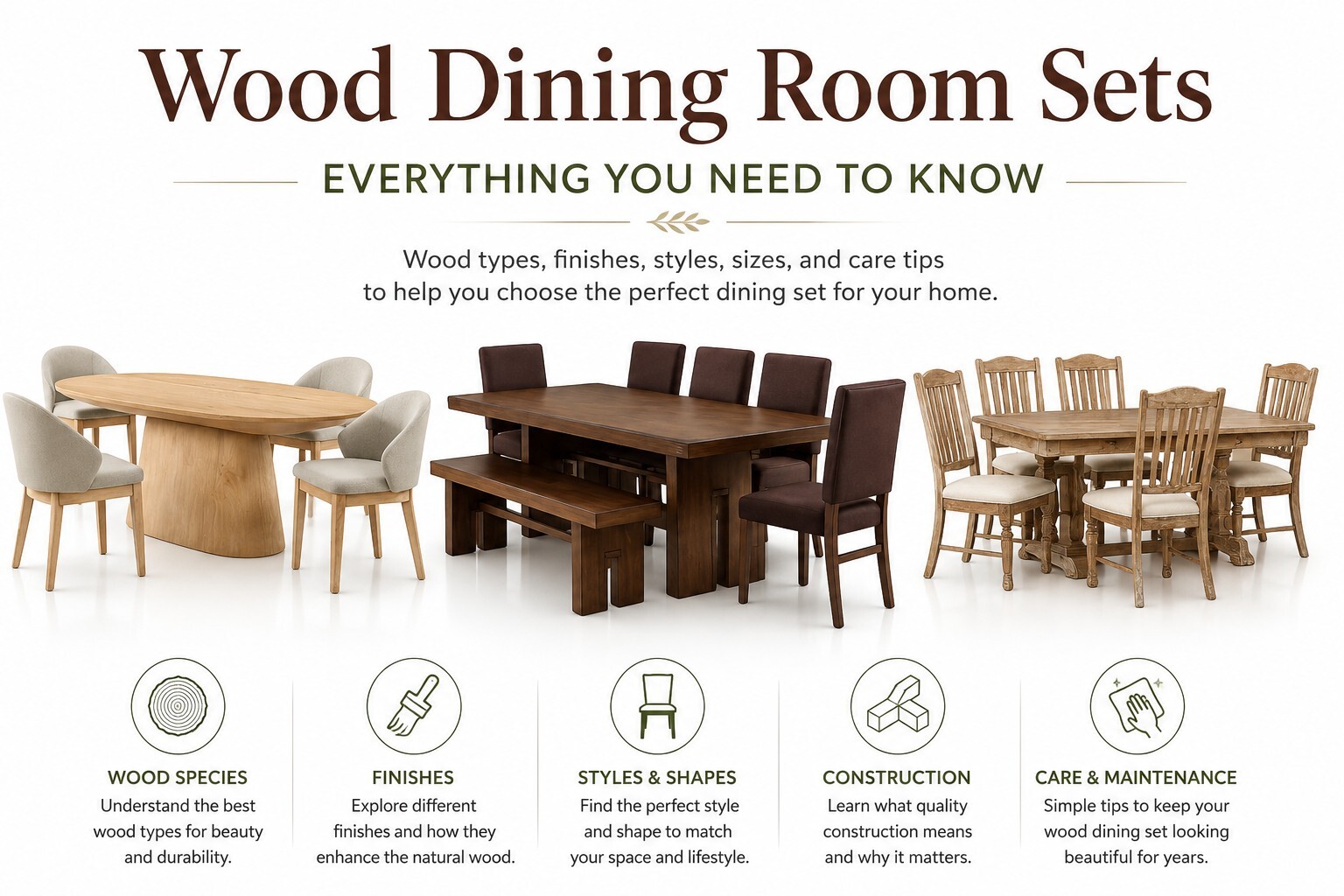
Few pieces of furniture receive as much daily use as the dining table. It's where families gather for meals, children complete homework, friends celebrate special occasions, and conversations continue long after dinner has ended. Choosing the right dining room set isn't simply about finding a table that fits your room, it's about investing in furniture that will serve your household beautifully for many years.
Among all available materials, wood remains the most popular choice for dining room furniture. Its natural warmth, durability, and timeless appeal make it suitable for nearly every decorating style, from cozy farmhouse homes to sleek contemporary interiors. Unlike many trend-driven materials, quality wood furniture ages gracefully and often becomes even more attractive over time.
Today's wood dining room sets are available in an incredible variety of sizes, finishes, wood species, and designs. Whether you're furnishing a compact apartment, a growing family's dining room, or a formal entertaining space, there's a wood dining set designed to meet your needs.
In this guide, we'll explain everything you need to know before purchasing a wood dining room set, including the different types of wood, table shapes, seating capacities, finishes, popular design styles, and practical care tips that will help your furniture remain beautiful for years to come.
Before exploring different wood species and finishes, you may also find our guide on How to Choose the Right Dining Table Size for Your Room helpful. It explains how to measure your dining space, maintain comfortable clearance around the table, and choose a size that fits your home.
Why Choose a Wood Dining Room Set?
Wood dining room sets have remained a favorite among homeowners for generations because they combine beauty, functionality, and long-term value. While glass, metal, and stone dining tables each have their place, wood continues to be the material that homeowners return to time and time again.
Timeless Beauty
Wood never goes out of style. Whether your home features traditional architecture, modern interiors, farmhouse décor, or Scandinavian simplicity, wood naturally complements almost every design style. As decorating trends evolve, a quality wood dining set continues to look appropriate and elegant.
Unlike trendy materials that may feel dated after a few years, wood develops character with age. Natural grain patterns, warm tones, and handcrafted details create a unique appearance that manufactured materials simply cannot duplicate.
Built for Everyday Living
Dining tables experience daily use. Meals, family gatherings, homework sessions, crafts, holiday dinners, and game nights all place demands on the furniture.
Quality wood dining room sets are designed to withstand years of regular use while maintaining their structural integrity. With proper care, many wood dining tables remain beautiful for decades.
A Style for Every Home
One of wood's greatest advantages is its incredible versatility.
Whether you prefer:
- Modern minimalist interiors
- Rustic farmhouse charm
- Mid-century modern design
- Coastal living
- Industrial lofts
- Traditional elegance
there is a wood dining room set designed specifically for that aesthetic. Different wood species, stains, finishes, and table bases create dramatically different looks while maintaining the warmth that only real wood provides.
Easy to Coordinate
Wood acts as an excellent foundation for decorating.
It pairs beautifully with:
Upholstered dining chairs
- Wood chairs
- Metal chairs
- Fabric benches
- Area rugs
- Pendant lighting
- Decorative centerpieces
Changing accessories over time can completely refresh your dining room without replacing the furniture itself.
Excellent Long-Term Value
A quality wood dining room set is often one of the smartest furniture investments homeowners make.
Rather than replacing inexpensive furniture every few years, many families purchase a well-built wood dining set once and enjoy it for decades. Quality craftsmanship, sturdy construction, and timeless styling often make wood furniture the better long-term value.
Suitable for Growing Families
Wood dining room sets easily adapt as families grow.
Many collections include:
- Extendable tables
- Matching buffets
- China cabinets
- Sideboards
- Additional dining chairs
- Dining benches
This flexibility allows your dining room to evolve with your family's needs over time.
Types of Wood Used in Dining Room Sets
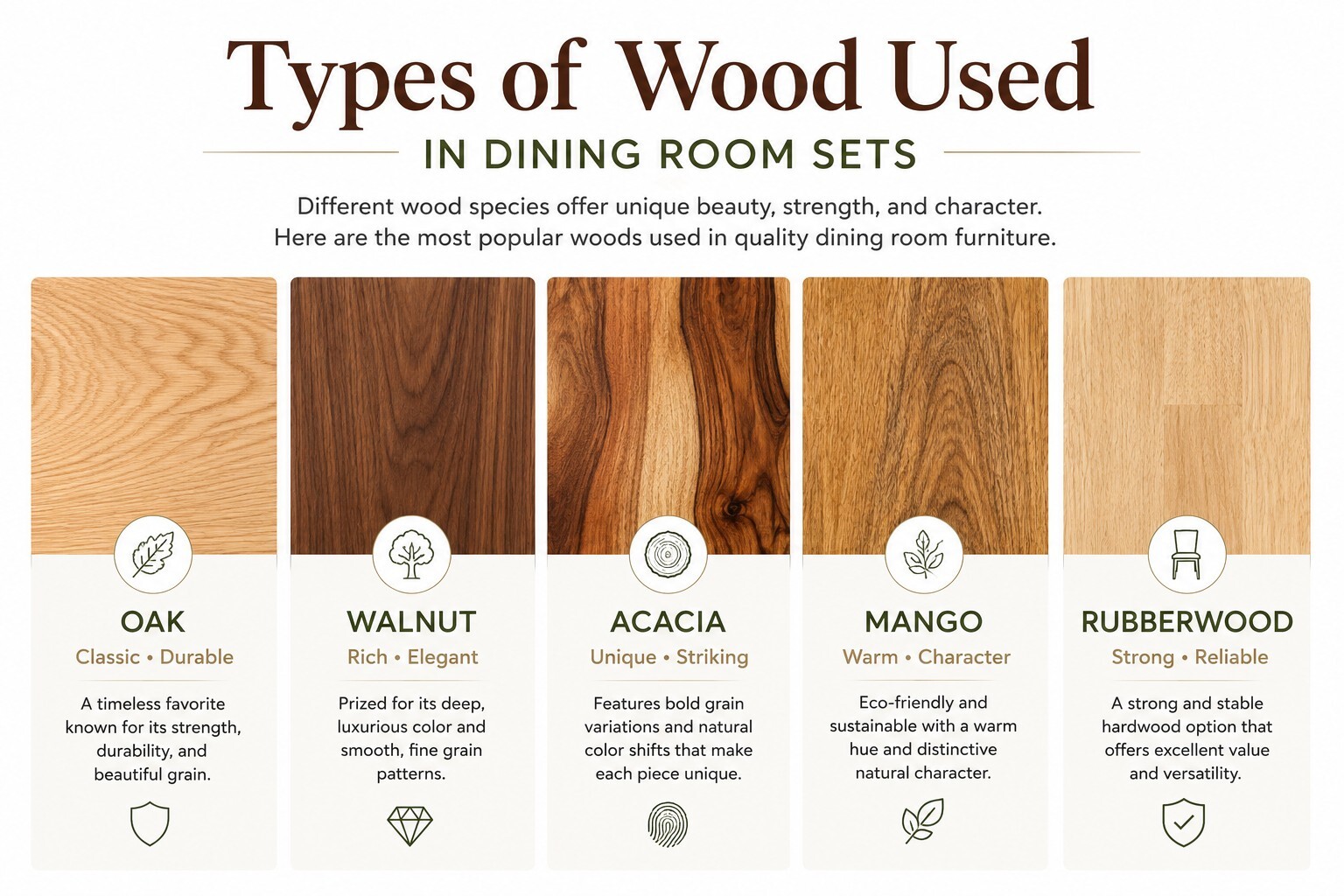
Not all wood dining room sets are built from the same materials. Different wood species offer unique grain patterns, colors, durability, and price points. Understanding these differences will help you choose a dining set that matches both your lifestyle and personal taste.
Comparison Table
Wood Type Appearance Durability Best For
Oak Prominent grain with warm natural tones Excellent Everyday family dining
Walnut Rich chocolate brown with elegant grain Excellent Contemporary and upscale
Acacia Distinctive grain with natural color variation Excellent Rustic and modern homes
Mango Wood Warm golden tones with unique character Very Good Casual and eclectic interiors
Rubberwood Smooth, consistent grain w/stained finishes Good Affordable solid wood furniture
Engineered Wood Uniform appearance w/veneers/laminates Good Budget-conscious buyers
Oak
Oak has been one of the most trusted furniture woods for centuries. Known for its strength and distinctive grain, it offers an ideal combination of durability and timeless style.
Oak dining room sets work well in:
- Farmhouse interiors
- Traditional homes
- Scandinavian spaces
- Modern organic designs
Its lighter natural color also makes rooms feel larger and brighter.
Walnut
Walnut is widely considered one of the most beautiful furniture woods available.
Its deep chocolate coloring and smooth grain create an upscale appearance that works especially well in contemporary and mid-century modern homes.
Walnut dining tables often become the centerpiece of the room because of their luxurious appearance and natural richness.
Acacia
Acacia has become increasingly popular over the past decade thanks to its exceptional durability and striking natural grain patterns.
Every table tends to look slightly different because of the wood's dramatic color variation.
Acacia works particularly well in:
- Rustic homes
- Organic modern interiors
- Industrial spaces
- Contemporary dining rooms
Mango Wood
Mango wood offers a wonderful balance between beauty, sustainability, and affordability.
Its warm golden tones and naturally varied grain give each dining table its own personality. Because mango trees are harvested after their fruit-producing years, this wood is often considered an environmentally responsible choice.
Mango wood complements casual, coastal, bohemian, and modern farmhouse interiors while providing dependable durability for everyday dining.
Rubberwood
Rubberwood is a practical and environmentally friendly hardwood commonly used in well-constructed dining furniture.
It features a smooth, even grain that accepts both paint and stain exceptionally well, making it available in a wide variety of finishes, from crisp white and soft gray to rich espresso tones.
Rubberwood is an excellent choice for homeowners looking for solid wood furniture at a more accessible price point.
Engineered Wood
Many dining room sets incorporate engineered wood in select components while using solid wood in structural areas. High-quality engineered wood offers excellent stability and helps reduce expansion and contraction caused by changes in temperature and humidity.
When finished with quality wood veneers, engineered wood can closely resemble solid wood while keeping furniture more affordable.
For many households, it provides an excellent balance between appearance, durability, and value.
Choosing the Right Wood for Your Home
There is no single "best" wood for every dining room. The right choice depends on your decorating style, budget, and how the table will be used.
If durability is your highest priority, oak and acacia are excellent choices for active households. If you're looking for a more refined, contemporary appearance, walnut is hard to beat. For those seeking natural character at a great value, mango wood offers unique grain patterns and inviting warmth.
Ultimately, the best wood dining room set is the one that fits your home's style while providing the durability and functionality your family needs.
Choosing the Right Table Shape
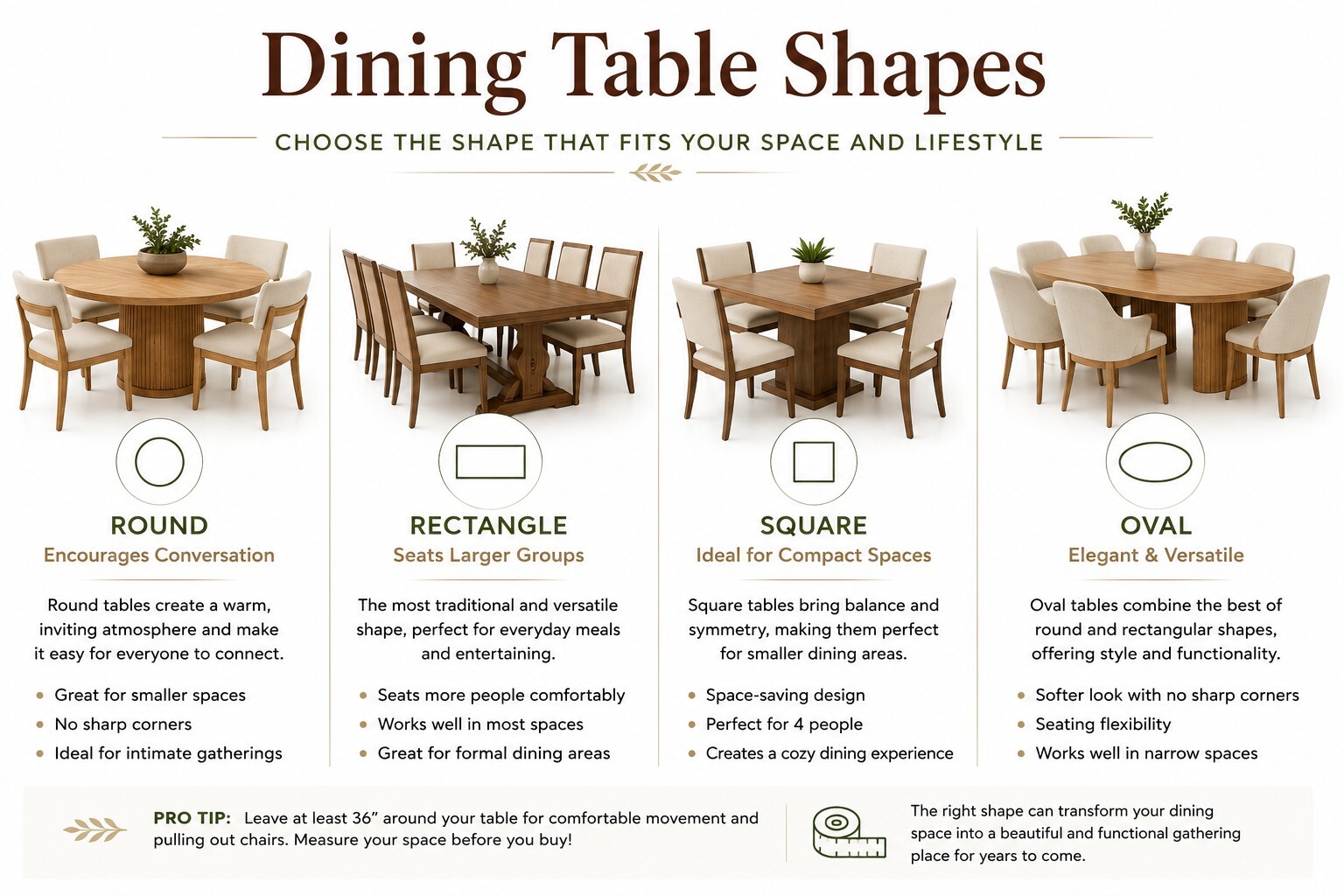
The shape of your dining table has just as much impact on your dining experience as the material it's made from. A table should not only complement the style of your home but also fit comfortably within your available space and accommodate the number of people you plan to seat.
Round, rectangular, square, and oval dining tables each offer unique advantages. Understanding how they differ will help you choose a wood dining room set that feels comfortable for everyday meals and special gatherings alike.
Round Wood Dining Tables
Round dining tables are one of the most popular choices for today's homes because they encourage conversation and create a welcoming atmosphere. Since everyone faces one another equally, meals often feel more relaxed and social.
Without sharp corners, round tables also improve traffic flow, making them ideal for apartments, breakfast nooks, and smaller dining rooms.
Many homeowners choose round wood dining tables because the natural grain of the wood softens the room while the circular shape makes the space feel more open.
Round tables are ideal for:
- Small to medium-sized dining rooms
- Open-concept living areas
- Families with young children
- Casual entertaining
- Cozy breakfast areas
If you're considering a round table, our Round Dining Table Size Guide (48", 54", 60" Tables Explained) explains how to choose the ideal size for your room and seating needs.
Rectangular Wood Dining Tables
Rectangular tables remain the traditional favorite for larger families and formal dining rooms.
Their elongated shape provides generous seating while making excellent use of longer rooms. They also pair beautifully with benches, armchairs, or upholstered seating.
If you frequently host holidays or dinner parties, a rectangular wood dining table often provides the greatest flexibility.
Many rectangular wood tables are also available with extension leaves, allowing you to accommodate additional guests without permanently occupying extra floor space.
Rectangular tables work best in:
- Large dining rooms
- Formal dining spaces
- Long, narrow rooms
- Homes that entertain frequently
Square Wood Dining Tables
Square dining tables create an intimate dining experience because every seat remains equally close to the center of the table.
They work especially well in square-shaped rooms where a rectangular table might leave unused corners or make the room feel unbalanced.
Most square wood dining room sets comfortably seat four people, making them an excellent choice for couples, smaller families, or apartment living.
Square tables are excellent for:
- Apartments
- Condominiums
- Small dining rooms
- Breakfast rooms
- Four-person households
Oval Wood Dining Tables
Oval dining tables combine many of the advantages of both round and rectangular designs.
Their curved ends soften the appearance of the room while still providing generous seating capacity.
Because they lack sharp corners, oval tables often improve traffic flow while maintaining the elegant proportions of a rectangular table.
For homeowners seeking a formal yet inviting appearance, an oval wood dining table offers an excellent balance between style and practicality.
Oval tables are perfect for:
- Medium to large dining rooms
- Transitional interiors
- Traditional homes
- Formal entertaining
- Families needing additional seating
Which Table Shape Is Best?
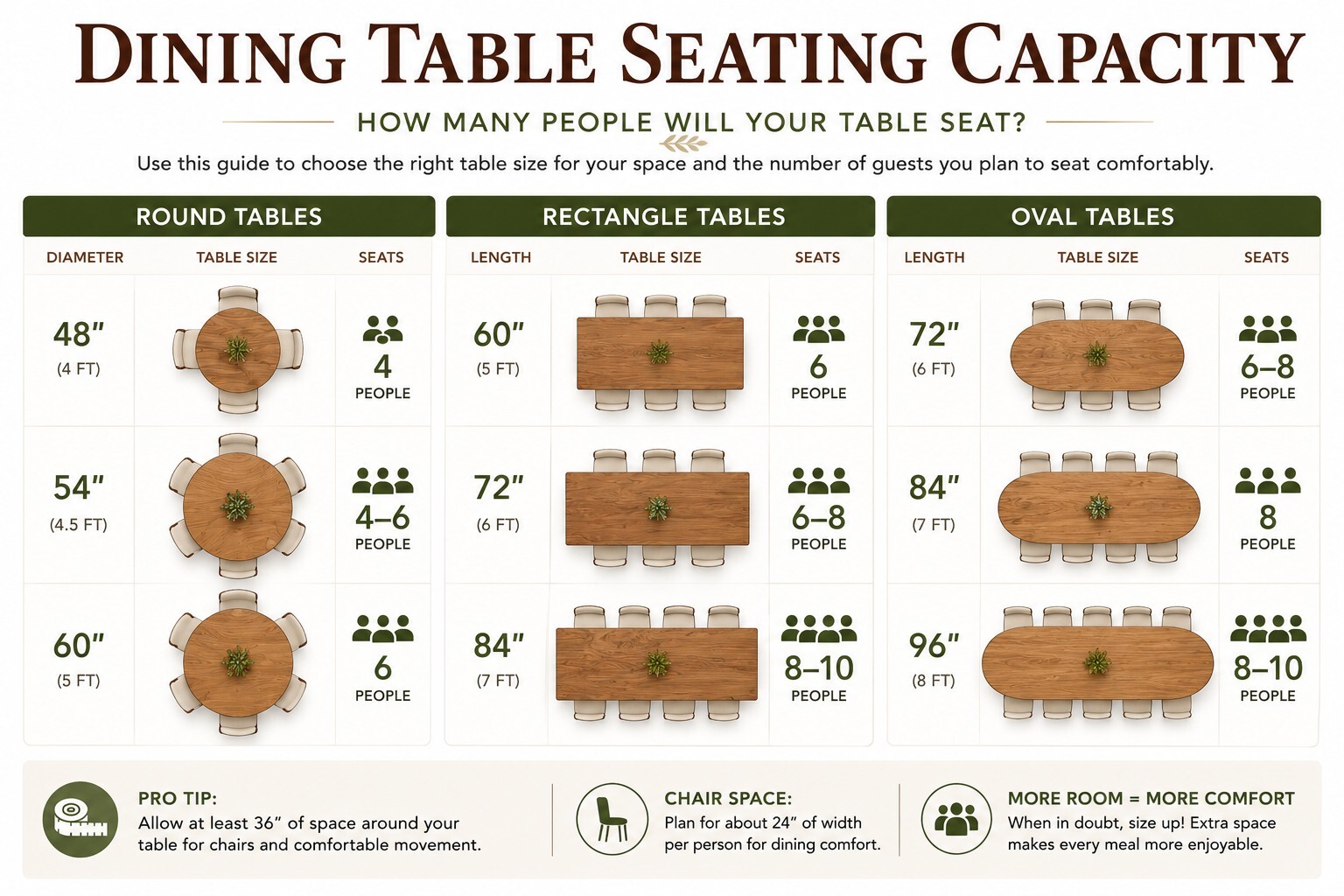
There isn't one perfect table shape for every home. Instead, consider the size of your room, the number of people you typically seat, and how you plan to use the table.
Table Shape Best For Seating Room Size
Round Conversation, everyday family dining 2–8 people Small to medium
Rectangular Larger families and entertaining 4–12 people Medium to large
Square Couples and compact spaces 2–4 people Small
Oval Elegant entertaining w/better traffic flow 6–10 people Medium to large
As a general rule, leave at least 36 inches of clearance between the edge of your dining table and nearby walls or furniture. This provides enough space for chairs to slide out comfortably and for people to move around the room without feeling crowded.
How Many People Can a Wood Dining Table Seat?
One of the most common questions homeowners ask is, "What size dining table do I need?"
The answer depends on how many people you expect to seat on a daily basis, how often you entertain, and the size of your dining room.
A table that comfortably seats your family every day while allowing room for occasional guests is usually the best long-term investment.
Seating Capacity Guide
Seats Recommended Table Size
2 3 0–36" Round or 30–36" Square
4 42–48" Round or 48" Rectangle
6 54–60" Round or 60–72" Rectangle
8 72–96" Rectangle or 60–72" Oval
10 96–120" Rectangle or Large Extendable Table
These are general recommendations and may vary slightly depending on chair width and table design.
Everyday Dining vs. Entertaining
Many homeowners purchase a dining table based solely on everyday use. While that works for some households, it's also worth thinking about birthdays, holidays, and family gatherings.
If you frequently host guests, an extendable dining table offers outstanding flexibility. Extension leaves allow you to expand the table when needed while keeping a more compact footprint during everyday use.
If you regularly entertain family and friends, our guide to Extendable Dining Table Sets for 6–10 explains how expandable tables can provide additional seating without taking up extra space every day.
Don't Forget Chair Space
When choosing a dining room set, it's important to consider more than just the table dimensions.
Allow approximately 24 inches of table width per person so everyone has enough elbow room to dine comfortably.
Also keep at least 36 inches of walking space around the table for chairs and traffic flow. Larger dining rooms may benefit from 42 to 48 inches of clearance for an even more spacious feel.
Planning for both seating and circulation ensures your dining room remains comfortable whether you're enjoying a quiet family dinner or hosting a holiday celebration.
Popular Wood Dining Styles
One of the reasons wood dining room sets remain so popular is their incredible versatility. By changing the wood species, finish, table base, or chair design, the same natural material can suit almost any decorating style.
Whether your home is modern, traditional, rustic, or somewhere in between, there's a wood dining room set designed to complement your space.
Organic Modern
Organic Modern combines clean contemporary lines with the warmth of natural materials. Light oak, walnut, and soft neutral finishes are often paired with rounded edges, sculptural bases, and simple silhouettes to create spaces that feel calm and inviting.
This style is ideal for homeowners who appreciate minimalist design without sacrificing comfort.
If you love this look, explore our article on Organic Modern Dining Room Sets: The Perfect Blend of Warmth and Contemporary Design for design inspiration and decorating ideas.
Farmhouse
Farmhouse dining furniture celebrates warmth, character, and everyday functionality. Thick tabletops, visible wood grain, and inviting finishes create spaces that feel lived in and welcoming.
Modern farmhouse collections often blend traditional craftsmanship with updated details, making them equally at home in country and suburban settings.
For more ideas, read our guide to Farmhouse Dining Room Sets: Timeless Style for Modern Homes.
Mid-Century Modern
Mid-century modern dining room sets emphasize clean lines, tapered legs, and elegant proportions. Walnut remains one of the most recognizable wood choices for this style, creating furniture that feels sophisticated without being overly ornate.
The timeless appeal of mid-century design continues to make it a favorite in both contemporary and classic homes.
Scandinavian
Scandinavian dining furniture focuses on simplicity, light colors, and functionality. Natural oak finishes, clean silhouettes, and uncluttered designs help create bright, airy dining spaces.
This style works especially well in smaller homes where lighter furniture can make a room feel larger and more open.
Industrial
Industrial dining room sets combine the warmth of wood with the strength of metal. Steel bases, exposed hardware, and reclaimed-looking finishes create furniture with urban character while remaining highly durable.
Industrial wood dining tables pair beautifully with loft apartments, modern homes, and transitional interiors.
Contemporary
Contemporary wood dining furniture embraces current design trends while maintaining timeless appeal. Expect smooth finishes, bold geometric bases, mixed materials, and refined craftsmanship.
These collections are perfect for homeowners seeking furniture that feels fresh, sophisticated, and versatile.
Traditional
Traditional wood dining room sets feature elegant detailing, classic proportions, and rich finishes that have remained popular for generations. Decorative legs, framed chair backs, and warm wood tones create a formal yet welcoming atmosphere.
This style is an excellent choice for those who appreciate timeless craftsmanship and furnishings that won't go out of fashion.
Choosing a Style That Fits Your Home
Rather than following trends, choose a wood dining room set that complements the architecture of your home and reflects how you live. A style that feels authentic to your space will remain enjoyable long after decorating trends change.
Whether you prefer the warmth of farmhouse, the simplicity of Scandinavian design, or the refined look of walnut mid-century furniture, wood offers the flexibility to create a dining room that feels both beautiful and inviting.
Understanding Wood Grain and Natural Character
When shopping for a wood dining room set, you may notice that two tables made from the same type of wood can still look noticeably different. One may feature long, even lines, while another displays sweeping arches, small knots, darker streaks, or variations in color.
These differences are created by the wood grain and the natural characteristics of the tree. They are not necessarily defects. In many cases, they are exactly what gives real wood furniture its warmth, authenticity, and individual character.
Understanding a few common grain patterns and finishing techniques can help you appreciate why one wood dining table may look more refined, rustic, dramatic, or textured than another.
Straight Grain
Straight grain appears as long, relatively consistent lines running along the surface of the wood.
It creates a clean and balanced appearance that works especially well with contemporary, Scandinavian, and minimalist furniture. Straight grain can make a tabletop feel calm and visually uncluttered, particularly when paired with a natural or light-colored finish.
This type of grain can be found in several furniture woods, including walnut, oak, maple, and ash.
Cathedral Grain
Cathedral grain features broad, curved patterns that resemble pointed arches or cathedral windows.
It is often seen in oak and other woods when the boards are cut in a way that reveals the tree's growth rings more dramatically. On a large dining table, cathedral grain can become an important part of the design rather than simply a background detail.
Homeowners who enjoy visible wood character often appreciate cathedral grain because it highlights the natural origin of the furniture.
Natural Knots and Color Variation
Knots, mineral streaks, and variations in tone are common characteristics of real wood.
Some furniture collections are designed to minimize these differences for a more uniform appearance. Others intentionally showcase them to create a rustic, farmhouse, organic, or handcrafted look.
Small knots and color variations should not automatically be viewed as imperfections. They often help distinguish natural wood furniture from surfaces that are printed or manufactured to look perfectly consistent.
Because every tree develops differently, no two real wood tabletops will look exactly alike.
Open-Grain and Closed-Grain Woods
Wood species can also be described as open grained or closed grained.
Open-grain woods, including oak and ash, have larger visible pores and a more noticeable surface texture. Their grain patterns often remain easy to see even after staining or finishing.
Closed-grain woods, such as maple and cherry, generally have smaller pores and a smoother, more uniform surface.
Neither type is automatically better. Open-grain woods are often chosen when visible texture and natural character are desired, while closed-grain woods may appeal to homeowners who prefer a smoother and more refined appearance.
Wire-Brushed Finishes
Wire brushing is a finishing technique that removes some of the softer wood fibers from the surface while leaving the harder grain slightly raised.
This creates a subtle texture that makes the grain more noticeable to both the eye and the touch. Wire-brushed dining tables are especially popular in farmhouse, rustic, coastal, and organic modern interiors.
The textured surface may also help make minor everyday marks less noticeable than they would be on a perfectly smooth, glossy tabletop.
Distressed Wood
Distressed wood is intentionally finished to create the appearance of furniture that has developed character over time.
Depending on the design, distressing may include softened edges, small indentations, rubbed areas, finish variation, or other carefully applied details. These features are part of the intended appearance and should not be mistaken for shipping damage or premature wear.
Distressed dining room sets are particularly well suited to farmhouse, cottage, rustic, and casual family homes.
Live-Edge Wood
A live-edge table preserves some of the natural contour of the tree along one or more edges of the tabletop.
Rather than cutting every side into a perfectly straight line, the furniture maker allows the natural shape of the wood to become part of the design. Live-edge tables often have a bold, organic appearance and may be paired with wood, metal, or sculptural bases.
Because natural edges vary from one slab or board to another, each live-edge table has an especially individual look.
Every Wood Table Is Unique
One of the greatest appeals of real wood furniture is that it does not look mechanically identical from one piece to the next.
Even dining tables made from the same wood species and finished in the same stain may display different grain patterns, knots, or color variations. These natural differences are part of the material's beauty and should be expected when purchasing genuine wood furniture.
For many homeowners, that individuality is exactly what makes a wood dining room set feel warmer and more personal.
What to Look for in a Quality Wood Dining Room Set
The appearance of a dining room set is important, but construction quality determines how well the furniture will perform over time.
A table may look impressive in a photograph while still differing significantly from another set in stability, joinery, finish quality, chair comfort, and long-term durability.
Before purchasing, it is worth looking beyond the color and style to understand how the furniture is built.
A Stable Table Base
A quality dining table should feel stable when weight is placed on the top or when someone gently presses against the edge.
The base design may include four legs, a pedestal, a trestle, or a sculptural center support. Regardless of style, the base should distribute weight evenly and keep the tabletop secure.
Large tables require especially strong support. A visually attractive base that is too narrow or lightly constructed may allow the table to wobble or feel less substantial during everyday use.
Strong Joinery
Joinery refers to the way separate pieces of wood are connected.
Well-built dining furniture may use dowels, corner blocks, mortise-and-tenon joints, bolts, screws, brackets, or a combination of several methods. The specific construction varies by manufacturer and price range, but the connections should feel secure and properly aligned.
On dining chairs, pay particular attention to the legs, seat frame, and back supports, since these areas experience repeated pressure whenever someone sits down or moves the chair.
A Properly Supported Tabletop
The underside of the table is just as important as the visible surface.
Aprons, support rails, mounting plates, and reinforcement components help keep the tabletop stable and properly connected to the base. Extendable tables should also have a dependable mechanism that allows the leaves to open, close, and align correctly.
A well-supported tabletop is less likely to shift, sag, or feel unstable during use.
Comfortable and Well-Proportioned Chairs
Dining chairs should be evaluated for both appearance and comfort.
A chair may look attractive but feel uncomfortable if the seat is too shallow, the backrest is poorly angled, or the height does not coordinate properly with the table. Most dining tables are approximately 30 inches high, while dining chair seats commonly measure around 18 inches from the floor.
This difference provides comfortable legroom for most people, although exact measurements can vary.
Look for chairs with supportive backs, stable legs, and enough seat width for comfortable everyday dining. Upholstered chairs should also have firm padding and properly secured fabric.
A Durable Protective Finish
The finish does more than determine the color of the furniture. It also helps protect the wood from moisture, stains, food residue, and routine wear.
A quality finish should appear reasonably even across the tabletop, edges, and visible components. Some intentional variation may be present on distressed or handcrafted designs, but the surface should still feel properly sealed and suitable for normal dining use.
No wood finish is completely resistant to heat, scratches, or moisture, so daily protection remains important.
Smoothly Operating Extension Leaves
When purchasing an extendable dining table, inspect how the extension system works.
Some tables use removable leaves that must be stored separately, while others include self-storing butterfly leaves. Either design can perform well when properly constructed.
The table should open and close smoothly, and the leaf should align as evenly as possible with the surrounding tabletop. A small seam between sections is normal, but the surfaces should not feel severely uneven or unstable.
Consistent Chair Construction
A dining set should feel coordinated not only in style but also in quality.
Check that the chairs sit evenly on the floor and that the backrests, legs, stretchers, and seats appear properly aligned. Small variations can occur with natural materials, but noticeable wobbling or poorly fitted components may indicate an assembly or manufacturing issue.
Proper assembly is also essential. Even a well-made chair can feel unstable when hardware is not tightened correctly.
Appropriate Materials for the Price
Quality does not always mean that every single component must be made from one solid piece of wood.
Many well-constructed dining sets combine solid wood frames with veneers or engineered panels in areas where added stability is beneficial. High-quality veneers can provide the appearance of premium wood while helping control expansion, weight, and cost.
The important consideration is whether the materials are appropriate for the furniture's intended use and clearly represented in the product information.
Clear Product Information
A reputable product listing should provide useful information about:
- Table dimensions
- Chair dimensions
- Seating capacity
- Materials Finish
- Extension leaves
- Assembly requirements
- Included pieces
Detailed specifications make it easier to compare products and reduce the likelihood of choosing a table that is too large, too small, or otherwise unsuitable for the room.
Construction That Matches Your Household
The best dining room set is not necessarily the heaviest or most expensive one. It is the set whose construction matches how your household will use it.
A formal dining table used occasionally may have different requirements from a table used every day for meals, homework, crafts, and family gatherings. Homes with children may place greater value on durable finishes and easy-to-clean seating, while frequent entertainers may prioritize extension leaves and additional chairs.
Quality should always be considered in relation to real-life use.
Choosing the Right Wood Finish
The finish of a wood dining room set has a major effect on the overall atmosphere of the room.
The same table design can appear airy and contemporary in light oak, rich and sophisticated in walnut, relaxed in a distressed finish, or dramatic in black. A finish should complement the room while also reflecting how much visible grain, color variation, and everyday wear you prefer.
Natural Wood Finishes
Natural finishes allow much of the original wood color and grain to remain visible.
They are especially popular in Scandinavian, coastal, contemporary, and organic modern interiors. Natural wood dining sets often make a room feel warmer without making it feel dark or heavy.
They also coordinate easily with neutral upholstery, woven textures, stone, metal, and many flooring colors.
Light Oak Finishes
Light oak finishes create a bright and casual appearance.
They are a strong choice for smaller dining rooms because lighter furniture can help the space feel more open. Light oak also works beautifully with soft white walls, beige fabrics, black accents, and natural materials.
Because the grain often remains visible, light oak offers warmth and character without overwhelming the room.
Walnut Finishes
Walnut finishes range from medium brown to deep chocolate tones.
They bring richness and sophistication to dining spaces and are especially popular in mid-century modern, contemporary, and transitional interiors. Walnut pairs well with cream upholstery, brass or black accents, and warm neutral décor.
In rooms with limited natural light, consider balancing a dark walnut table with lighter chairs, walls, or flooring.
Espresso and Dark Brown Finishes
Espresso and dark brown dining sets create a formal, grounded appearance.
They can work well in traditional, transitional, and contemporary spaces, particularly when the room is large enough to support darker furniture. These finishes may make a strong visual statement and often coordinate well with upholstered chairs.
However, dust, fingerprints, and surface marks can sometimes be more visible on very dark, smooth finishes.
Black Finishes
Black dining furniture creates contrast and definition.
It may appear modern, industrial, farmhouse, or traditional depending on the shape of the table and chairs. Black finishes work especially well in rooms with light flooring, pale walls, or natural wood accents.
A completely black set can feel dramatic, while a black table base paired with a natural wood top creates a softer two-tone appearance.
Distressed Finishes
Distressed finishes include deliberate variations, worn-looking edges, or textured areas that create a relaxed, aged appearance.
They are practical for busy households because small marks may blend more easily into the existing character of the furniture. Distressed finishes are particularly popular in farmhouse and rustic dining rooms.
Because the variation is intentional, homeowners should expect the finish to appear less uniform than a smooth contemporary surface.
Two-Tone Finishes
Two-tone dining room sets combine two colors or materials within the same design.
Common examples include a natural wood tabletop with a black, white, or gray base. This approach adds visual interest and can help connect different colors already present in the room.
Two-tone dining sets are especially versatile because they can bridge farmhouse, transitional, contemporary, and casual decorating styles.
Painted Wood Finishes
Painted finishes, including white, gray, navy blue, and black, can give wood dining furniture a cleaner and more tailored appearance.
Paint may cover more of the natural grain than stain, although some painted or wire-brushed pieces still allow texture to remain visible. Painted dining sets work well when homeowners want a specific color rather than a traditional wood tone.
Chips and scratches may be more noticeable on some painted surfaces, so placemats and careful handling remain important.
Matching the Finish to the Room
Your dining table does not have to match every other wood finish in the room exactly.
In fact, a space can feel more natural when it includes a thoughtful mix of complementary wood tones. The key is to find a common element, such as similar warmth, undertones, hardware, or overall design style.
For example, a walnut dining table can coordinate beautifully with lighter oak flooring when the room also includes warm upholstery and neutral accessories.
Avoid choosing a finish based only on a small online color sample. Room lighting, photography, screen settings, and natural wood variation can all influence how a finish appears.
Solid Wood vs. Engineered Wood
One of the most common questions shoppers ask is whether they should choose a solid wood dining room set or one made with engineered wood.
Both materials can be used successfully in furniture construction. The better choice depends on the quality of the product, the location in which each material is used, the buyer's budget, and the level of long-term use expected.
Comparison Table
Feature Solid Wood Engineered Wood
Construction Cut from natural lumber Made from wood fibers, particles, or layered panels
Appearance Natural grain and variation Often finished with veneer, laminate, or paint
Durability Excellent when properly constructed Varies according to material quality and thickness
Weight Often heavier May be lighter, depending on construction
Stability Can expand and contract w/humidity Often dimensionally stable
Repairability May be sanded or refinished Usually more limited
Price Commonly higher Often more affordable
Best For Long-term use and natural wood Value, stability, and controlled pricing
What Is Solid Wood?
Solid wood furniture is made from pieces of natural lumber.
It is valued for its strength, visible grain, repairability, and ability to develop character over time. Depending on the finish and construction, some solid wood tabletops may be sanded and refinished after years of use.
However, solid wood naturally responds to changes in humidity. It may expand slightly in humid conditions and contract in dry conditions. Proper construction allows for this natural movement.
Solid wood furniture may also display knots, grain variation, and changes in color, all of which are expected characteristics of the material.
What Is Engineered Wood?
Engineered wood is made by combining wood fibers, particles, or layers into a stable panel.
Common examples include plywood, medium-density fiberboard, and particleboard. These materials differ significantly in strength and quality, so the term engineered wood alone does not tell the entire story.
Engineered panels are often used beneath veneers, painted finishes, or laminates. They may also be incorporated into furniture components where dimensional stability and controlled cost are important.
A well-made dining set can successfully combine engineered panels with solid wood legs, frames, aprons, or chair components.
What Is Wood Veneer?
Wood veneer is a thin layer of real wood applied over a stable core.
Because veneer is made from genuine wood, it can display authentic grain and color. It also allows furniture makers to use visually attractive wood across larger surfaces while controlling weight, cost, and natural movement.
Veneer should not automatically be viewed as low quality. Its performance depends on the core material, adhesive, thickness, edge treatment, and overall construction.
However, veneer surfaces generally cannot be sanded as aggressively as thick solid wood.
Is Solid Wood Always Better?
Solid wood offers important advantages, but it is not automatically superior in every component or every piece of furniture.
A poorly constructed solid wood table may perform worse than a carefully engineered table that combines solid wood framing with quality veneers and stable panels.
The overall design, joinery, support system, finish, and manufacturer standards matter just as much as the material label.
For shoppers who value natural variation, long-term use, and possible refinishing, solid wood is often worth the additional investment. For buyers seeking attractive furniture at a more accessible price, a well-built combination of solid and engineered wood can provide excellent value.
Choosing Between the Two
Consider how long you expect to keep the furniture and how it will be used.
Solid wood may be the better fit when:
- You want natural grain and individual character.
- You expect to keep the furniture for many years.
- Repairability or refinishing is important.
- The table will receive frequent daily use.
- You prefer heavier, more substantial furniture.
Engineered wood or mixed-material construction may be appropriate when:
- Budget is an important consideration.
- You want a painted or highly uniform finish.
- Lower weight is beneficial.
- You prefer a stable surface with less natural movement.
- The set will receive moderate rather than intensive use.
The most important step is to review the product specifications carefully rather than relying on appearance alone.
Caring for a Wood Dining Room Set
A quality wood dining room set can remain beautiful for many years when it is protected from excessive moisture, heat, sunlight, and abrasion.
Wood furniture does not require complicated maintenance, but consistent everyday care can make a significant difference in how the surface ages.
Clean Spills Promptly
Wipe up spills as soon as possible using a clean, soft cloth.
Even a protected tabletop can be affected when water, wine, oil, or other liquids remain on the surface for an extended period. Blot the spill rather than spreading it across a larger area.
Avoid soaking the surface or allowing moisture to collect around seams, leaves, or edges.
Use Placemats and Coasters
Placemats, coasters, and table pads provide a simple layer of protection against heat, moisture, scratches, and food residue.
Use coasters beneath cold drinks as well as hot beverages, since condensation can leave moisture on the finish.
For serving dishes, use trivets or heat-resistant pads rather than placing hot cookware directly on the tabletop.
Avoid Harsh Cleaning Products
Strong chemicals, abrasive cleaners, and rough scrubbing pads may damage or dull the finish.
For routine cleaning, a soft, slightly damp cloth is often sufficient. Follow with a dry cloth so that moisture does not remain on the surface.
When a furniture cleaner is necessary, use one that is appropriate for the specific finish and follow the
manufacturer's care instructions.
Dust Regularly
Dust may seem harmless, but particles can create small surface scratches when they are dragged across the table.
Use a soft microfiber or lint-free cloth and wipe gently in the direction of the grain whenever practical.
Avoid dry, rough materials that may rub debris into the finish.
Protect the Table from Direct Sunlight
Prolonged direct sunlight can gradually change the color of wood and some finishes.
When possible, use curtains, shades, or window coverings during the brightest part of the day. Rotating centerpieces and decorative items can also help prevent uneven color changes in areas that remain covered for long periods.
Some natural color development is normal, particularly with woods such as walnut and cherry.
Maintain Consistent Indoor Humidity
Because wood responds to moisture in the air, extreme humidity changes can affect furniture over time.
Very dry conditions may cause wood to contract, while high humidity may cause slight expansion. Maintaining a reasonably stable indoor environment can help reduce unnecessary movement.
Avoid placing a wood dining set directly against heating vents, fireplaces, radiators, or sources of excessive moisture.
Lift Rather Than Drag Objects
Dragging ceramic dishes, decorations, laptops, or serving pieces across the tabletop may create scratches.
Lift items whenever possible, especially if the bottom surface is rough. Felt pads can be added beneath centerpieces, decorative bowls, lamps, or other objects that remain on the table.
Check and Tighten Hardware
Dining chairs and tables may loosen slightly through repeated use and normal movement.
Periodically inspect visible bolts, screws, and connectors and tighten them when necessary. Do not overtighten, since excessive pressure may damage the wood or hardware.
Routine checks help prevent small movements from developing into more serious stability problems.
Move Furniture Carefully
Always lift dining tables and chairs rather than dragging them across the floor.
When moving a large table, follow the manufacturer's instructions and remove extension leaves when appropriate. Some tabletops and bases are designed to be separated before transportation.
Lifting furniture by the tabletop alone can place stress on the connection between the top and base.
Use Tablecloths Carefully
Tablecloths can protect the surface during meals and gatherings, but moisture should never become trapped underneath them.
After dining, remove or lift the covering and make sure the tabletop is dry. Avoid leaving plastic or vinyl coverings on the table for extended periods unless the furniture manufacturer specifically recommends them.
Some materials may react with the finish or trap heat and moisture.
Expect Normal Aging
Real wood furniture may develop subtle changes in color, texture, or surface character over time.
These changes are often part of the natural aging process and do not necessarily indicate a problem. With thoughtful care, a wood dining table can become more attractive and personal as it develops the marks of family meals and shared experiences.
The goal is not to keep the furniture looking untouched forever. It is to protect it well enough that it ages gracefully and remains enjoyable for many years.
Frequently Asked Questions
One of the final considerations when shopping for a wood dining room set is understanding how different materials, finishes, and designs perform in everyday life. Below are answers to some of the questions homeowners ask most often before making their purchase.
Are wood dining room sets a good long-term investment?
Yes. A well-built wood dining room set can provide decades of reliable use when properly cared for. Unlike many furniture materials that follow short-term design trends, wood offers timeless appeal and can adapt to changing décor simply by updating chairs, lighting, rugs, or accessories. Many homeowners view a quality wood dining set as one of the most worthwhile furniture investments they make because it serves both functional and decorative purposes every day.
Which wood is best for a dining room table?
There isn't one "best" wood for every household. Oak is widely appreciated for its durability and classic appearance, while walnut offers a rich, sophisticated look that complements many contemporary interiors. Acacia provides striking natural grain patterns, mango wood adds warmth and character, and rubberwood offers an excellent balance of value and performance. The ideal choice depends on your decorating style, budget, and how the table will be used.
How do I choose the right dining table size?
Start by measuring both your room and the area needed for chairs. Most designers recommend leaving at least 36 inches of clearance between the edge of the table and surrounding walls or furniture so people can comfortably sit down and move around the room. Also consider how many people you seat every day and whether you frequently entertain guests.
Is solid wood always better than engineered wood?
Not necessarily.
Solid wood offers natural beauty, long-term durability, and, in some cases, the ability to be refinished. However, high-quality engineered wood can provide excellent stability and value when used appropriately.
The overall construction, joinery, support system, and craftsmanship are often more important than relying solely on the material label.
What finish is easiest to maintain?
Natural wood, lightly textured, wire-brushed, and distressed finishes often do a good job of disguising fingerprints and small everyday marks.
Very dark, smooth finishes may show dust and fingerprints more readily, while glossy finishes can make scratches easier to notice.
Regardless of finish, using placemats, coasters, and proper cleaning techniques will help preserve the appearance of your furniture.
Can I mix different wood finishes in the same room?
Absolutely. Modern interiors often combine complementary wood tones rather than matching every piece exactly.
For example, a walnut dining table can pair beautifully with light oak flooring when the room includes warm neutral fabrics and coordinating accents. The key is maintaining a consistent design style and balancing the overall color palette.
How long should a quality wood dining room set last?
With normal household use and proper maintenance, a well-constructed wood dining room set can last for many years and, in many cases, decades.
Regular cleaning, protection from excessive moisture and heat, and periodic tightening of hardware all help extend the life of the furniture.
Should I choose a round or rectangular dining table?
Both are excellent choices.
Round tables encourage conversation and work especially well in smaller spaces, while rectangular tables typically seat more people and are ideal for larger dining rooms and frequent entertaining.
Your decision should be based on your room dimensions, seating requirements, and preferred style.
Are extendable dining tables worth buying?
If you regularly host family dinners, holidays, or gatherings, an extendable dining table can be an excellent investment.
It allows you to enjoy a compact table for everyday use while providing additional seating whenever guests arrive.
How do I protect my wood dining table?
Simple habits go a long way.
Use placemats, coasters, and trivets whenever possible. Clean spills promptly, avoid prolonged direct sunlight, dust regularly with a soft cloth, and avoid dragging heavy or rough objects across the tabletop.
With consistent care, your dining table can continue looking beautiful for years.
Final Thoughts
A wood dining room set is much more than a place to enjoy meals. It often becomes one of the most frequently used pieces of furniture in the home, a gathering place for everyday dinners, holiday celebrations, family conversations, homework sessions, and countless memories shared over the years.
Choosing the right dining room set begins with understanding your space, your seating needs, and the style that best reflects your home. From selecting the right wood species and finish to deciding between round, rectangular, square, or oval tables, every decision contributes to creating a dining room that feels both comfortable and inviting.
Quality construction, thoughtful design, and proper care all play an important role in ensuring that your furniture continues to perform beautifully for many years. Whether your preference is the clean simplicity of Scandinavian design, the warmth of farmhouse style, the elegance of walnut, or the timeless appeal of solid oak, a carefully selected wood dining room set can become an investment your family enjoys for generations.
We hope this guide has given you the knowledge and confidence to choose a dining room set that fits your lifestyle as well as your home. By understanding the materials, construction, finishes, and design options available today, you'll be well prepared to select furniture that offers lasting beauty, comfort, and everyday functionality.
Now that you understand the different wood species, table shapes, finishes, and construction methods, browse our collection of Wood Dining Room Sets to find a style that complements your home and your lifestyle.