

Game Room Tables: A Complete Guide to Choosing the Right Table for Your Home
Posted by Posted by eFurnitureHouse on 29th Dec 2014
Originally published: December 29, 2014 | Revised: October 6, 2026
A game room can be much more than a place to play, it can become a gathering space for family, friends and guests. Choosing the right game room table starts with understanding how you plan to use the room, how much space you have available and which types of games you enjoy most.
From poker and card tables to bumper pool and multi-game tables, there are options for dedicated game rooms as well as spaces that serve more than one purpose. Some tables are designed strictly for gaming, while others can transition between games, dining and everyday entertaining.
Before choosing a table, it's important to consider more than its overall dimensions. You'll also need enough room for chairs, players to move comfortably around the table, and any additional clearance required to actually play the game.
In this guide, we'll look at the different types of game room tables, how to measure your space, how much clearance to allow, and what to consider when choosing a table that fits both your room and the way you plan to use it.
What Types of Game Room Tables Are Available?
Game room tables come in several styles, and the right choice depends on the games you enjoy, the available space and whether the room needs to serve other purposes. Some tables are designed for a single game, while others combine multiple games or convert into a dining surface when playtime is over.
Poker and Card Tables
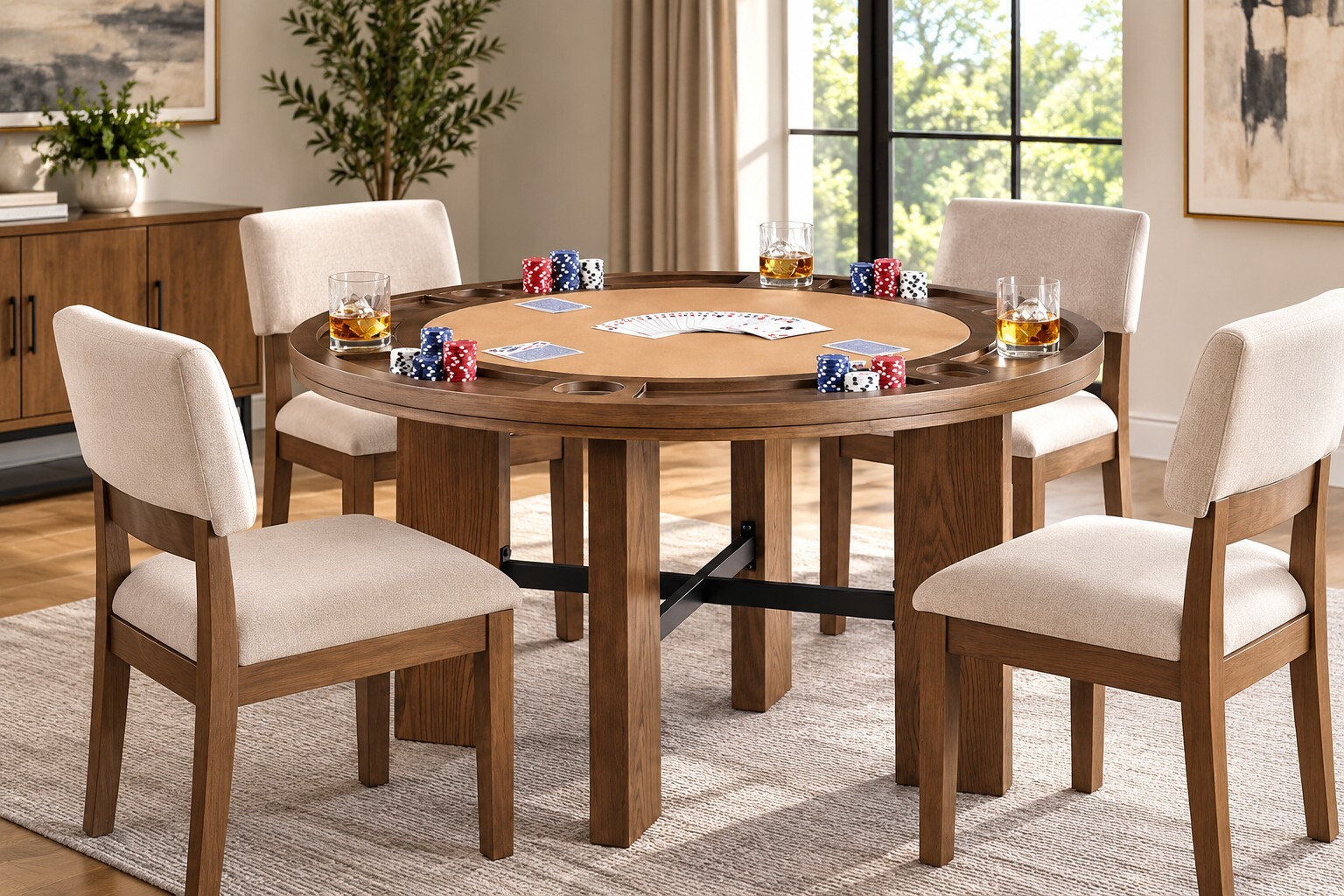
Poker and card tables provide a dedicated surface for card games and typically include features such as padded playing surfaces, cup holders and designated player positions. They can work well in game rooms where card nights and group entertaining are a regular activity.
When planning the room, remember to account for the chairs as well as the table itself. Players need enough space to sit comfortably and move their chairs without crowding walls or nearby furniture.
Bumper Pool Tables
Bumper pool provides a pool-style game in a considerably smaller footprint than a traditional billiard table. This makes bumper pool tables particularly useful for game rooms where space is limited.
Many bumper pool tables are also available with tops that allow the table to serve another purpose when the game isn't being played, making them a practical option for multipurpose rooms.
Multi-Game and Combination Tables
Multi-game tables combine two or more activities into a single piece of furniture. Depending on the design, one table may accommodate games such as poker, bumper pool or other tabletop games and may include a dining surface as well.
For homes without a dedicated game room, this versatility can be especially valuable. A combination table can provide a place for games and entertaining without requiring permanent space for several separate tables.
How Much Space Do You Need for a Game Room Table?
One of the most common mistakes when choosing a game room table is considering only the dimensions of the table itself. The actual space required is larger because players need room to sit, move their chairs and comfortably walk around the table.
Start With the Table Dimensions
Before purchasing a game table, check its overall length and width and compare those measurements with the usable area of your room. Measure the room rather than estimating, and take note of doors, windows, built-in cabinets and other furniture that may reduce the available space.
Remember that a table that technically fits inside a room may still be too large to use comfortably.
Allow Space for Chairs and Players
For game tables with seating, plan for approximately 30 to 36 inches of clearance between the edge of the table and a wall or other furniture whenever possible. This provides room for a chair and allows players to sit down and get up more comfortably.
In areas where people regularly need to walk behind seated players, additional clearance can make the room much easier to use.
Consider How the Game Is Played
Different games require different amounts of surrounding space. Poker and card tables primarily need room for seating and movement around the table, while other games may require additional playing clearance.
Before selecting a table, think about the space needed while the table is actually being used, not simply whether the table will fit in the room.
Don't Forget Multipurpose Rooms
If your game room also serves as a dining area, family room or entertaining space, consider how the table will affect everyday movement through the room. A convertible or multi-game table can be particularly useful in these spaces because one piece of furniture can serve several purposes.
The goal is not to fit the largest possible table into the room. It's to choose a table that leaves enough space for people to play, sit and move comfortably.
How to Choose the Right Game Room Table for Your Home
The best game room table isn't necessarily the largest or the one with the most features. It should fit the available space, accommodate the people who will use it and match how you plan to enjoy the room.
Think About Who Will Use the Table
Start by considering how many people will typically play at one time. A table used primarily by two or four family members may have very different requirements from one intended for larger gatherings, poker nights or parties.
If you entertain frequently, seating capacity and comfortable access around the table may be just as important as the games the table offers.
Dedicated Game Room or Multipurpose Space?
A dedicated game room gives you more freedom to choose a table designed primarily for play. In a family room, dining area or other shared space, versatility may be more important.
A table that converts from a gaming surface to a dining or everyday tabletop can allow one room to serve several purposes without adding more furniture.
Consider the Games You'll Actually Play
A multi-game table can offer excellent versatility, but more features aren't always better. Think about which games your family and guests are most likely to play regularly.
If poker and card games are the priority, comfortable seating and a good playing surface may matter most. If you enjoy several different activities but have limited space, a combination table may be the more practical choice.
Look Beyond the Tabletop
Construction, seating, storage and ease of conversion can all affect how enjoyable a game table is to use. If a table includes removable or reversible tops, consider where those pieces will be stored when they aren't being used.
Also consider how easily the table can transition from one use to another. A versatile table is most useful when changing configurations doesn't become a chore.
Game Tables That Double as Dining Tables
One of the biggest advantages of many game room tables is their ability to serve more than one purpose. Rather than dedicating an entire room to a table that is used only occasionally, a reversible-top game table can transition from everyday dining or entertaining to game night when needed.
How Reversible Game Table Tops Work
Many combination game tables feature a removable or reversible tabletop. One side provides a traditional finished surface suitable for dining, serving food or everyday use. Flip or remove the top, and the gaming surface underneath is ready for cards, poker or other games, depending on the table design.
Some models incorporate additional games such as bumper pool, giving one table several different functions without requiring additional floor space.
A Practical Choice for Multipurpose Rooms
Reversible tables can be especially useful in homes where a game room also functions as a dining area, family room or entertaining space. Instead of finding room for separate dining and game tables, one piece of furniture can accommodate both activities.
This also makes game tables practical beyond dedicated recreation rooms. A well-designed table can look like regular dining furniture when the gaming surface isn't in use.
Plan for the Tabletop
Before choosing a reversible or convertible table, find out how the top changes configurations and whether any sections need to be removed completely.
If removable pieces must be stored while playing, decide in advance where they will go. A table that converts easily, and has a convenient solution for any removable components, is much more likely to be used regularly.
Choosing Chairs and Seating for a Game Room Table
The table may be the centerpiece of a game room, but comfortable seating can make just as much difference, especially when games, meals or gatherings last for several hours.
Match the Chair Height to the Table
Most dining-height game tables are designed to work with standard dining or game chairs, but always check the table height before selecting seating. The chair should provide enough legroom beneath the table while keeping players at a comfortable height for cards, dining and other activities.
Consider Comfort for Longer Game Nights
A chair that works well for a quick meal may not necessarily be comfortable for several hours of cards or games. Upholstered seats, supportive backs and armrests can provide additional comfort when the table will be used frequently for entertaining.
Swivel and Caster Game Chairs
Some game tables are paired with chairs designed specifically for recreational use. Depending on the style, these chairs may include swivel bases, casters, adjustable height or tilt features, making it easier for players to move in and out from the table.
If you choose chairs with casters, consider the flooring surface as well. They may move differently on carpet, hardwood, tile and area rugs.
Make Sure the Chairs Have Room to Move
Don't determine seating capacity simply by counting how many chairs can fit around the tabletop. Each person needs enough room to sit comfortably, pull the chair away from the table and enter or leave without disturbing other players.
Before You Buy: A Game Room Table Measuring Checklist
Before ordering a game room table, take a few measurements and think about how the room will function once the table and chairs are in place. A little planning beforehand can prevent a table that fits on paper but feels crowded in everyday use.
Measure the Available Floor Space
Measure the length and width of the usable portion of the room. Don't automatically use the room's wall-to-wall dimensions if cabinets, fireplaces, doorways or other furniture occupy part of that space.
Marking the approximate table dimensions on the floor with painter's tape can also help you visualize how much room the table will actually occupy.
For additional room-planning and table-clearance tips, see our How to Choose the Right Dining Table Size for Your Room guide.
Add Clearance Around the Table
Remember the 30 to 36 inches of clearance discussed earlier as a useful starting point for tables with chairs. If people need to regularly walk behind seated players, allowing additional space can make the layout much more comfortable.
Check Doorways and the Delivery Path
Measure more than the final room. Consider the path the table must travel to reach it, including:
- Entry doors and interior doorways
- Hallways and tight turns
- Stairways and landings
- Elevators, when applicable
- Low ceilings or other obstacles along the delivery path
Compare these measurements with the packaged or component dimensions when that information is available.
Account for Chairs and Other Furniture
If you already own the chairs you plan to use, measure them as well. Don't forget other pieces in the room such as bars, cabinets, stools, entertainment centers or additional seating.
The room should still have comfortable traffic paths once everything is in place.
Plan for Reversible or Removable Tops
If the game table has a reversible or removable top, determine how much space is needed to change configurations and where removable pieces will be placed or stored.
Thinking about this before purchasing can make the difference between a feature that gets used regularly and one that becomes inconvenient.
Check the Product Specifications
Finally, review the specifications for the particular table you're considering. Dimensions, seating capacity, game features and conversion methods can vary considerably from one model to another.
Frequently Asked Questions About Game Room Tables
How much space should I leave around a game room table?
For a game table with chairs, approximately 30 to 36 inches of clearance between the edge of the table and surrounding walls or furniture is a useful starting point. More space may be helpful in areas where people need to walk behind seated players.
Can a game table also be used as a dining table?
Yes. Many game tables feature reversible or removable tops that provide a finished dining surface on one side and access to a gaming surface on the other. This makes them particularly useful in multipurpose rooms.
What is a multi-game table?
A multi-game table combines more than one activity in a single table. Depending on the model, it may include poker, card games, bumper pool or other games, along with a reversible dining top.
Are bumper pool tables good for smaller rooms?
Bumper pool generally requires less floor and playing space than traditional billiards, making it a good option for rooms where a full-size pool table would be impractical. You should still allow adequate clearance for players to move comfortably around the table.
What should I measure before buying a game room table?
Measure the available floor space, surrounding clearance, chairs and the complete delivery path into the room. Also consider doorways, hallways, stairways and tight turns, as well as any space needed to remove or reverse the tabletop.
Finding the Right Game Room Table
The right game room table should fit your space as well as the way you plan to use it. Consider the games you enjoy, the number of people you typically entertain, available seating and whether a reversible or multi-game design would make better use of the room.
Careful measuring and planning can help you choose a table that is comfortable for game night while still working naturally with the rest of your home.
Explore our selection of Game Room Tables to compare available styles, sizes and game options.