

Extendable Dining Tables: Are They Worth It? A Practical Buying Guide
Posted by Posted by eFurnitureHouse on 31st Aug 2026
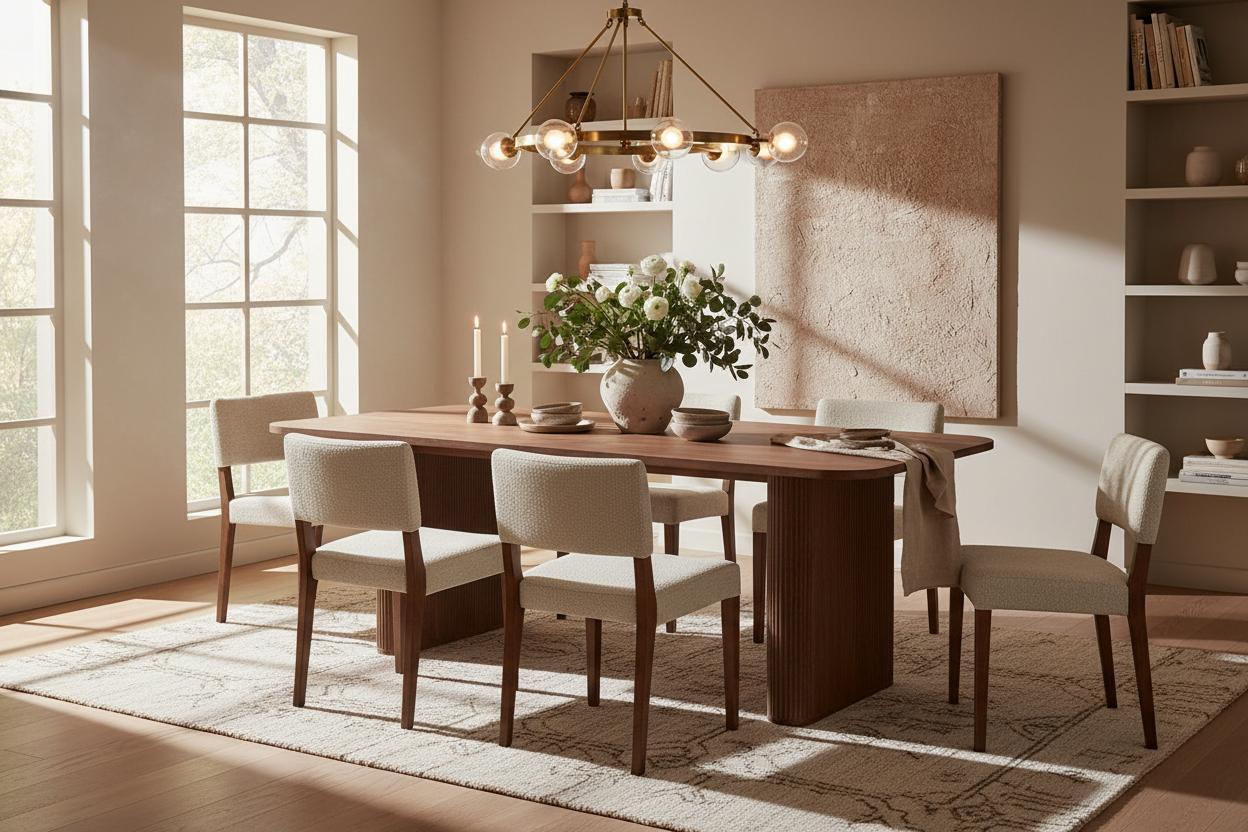
An extendable dining table gives you something a fixed-size table cannot: the ability to keep your dining area comfortable for everyday use while creating additional seating space when you need it.
For many homes, that makes an extendable table a practical choice. A table that comfortably seats four or six people during the week may expand to accommodate family gatherings, holidays, dinner parties, and other occasions without requiring a permanently oversized table.
But an extendable dining table is not automatically the right choice for every room.
Before buying one, it is important to understand how large the table becomes when fully extended, how the extension leaves work, where the leaves are stored, how the table base affects seating, and whether your dining room has enough space for both the larger table and the people sitting around it.
This guide covers the practical details you should consider before choosing an extendable dining table.
What Is an Extendable Dining Table?
An extendable dining table is designed to increase in length or overall surface area when additional seating is needed.
Depending on the design, the table may use one or more removable leaves, a butterfly leaf, a self-storing extension system, or another mechanism that allows the tabletop to expand.
When the additional space isn't needed, the table returns to its smaller everyday size.
That flexibility is the main reason extendable dining tables are so popular. You don't have to dedicate your dining room to a large table every day simply because you occasionally host more people.
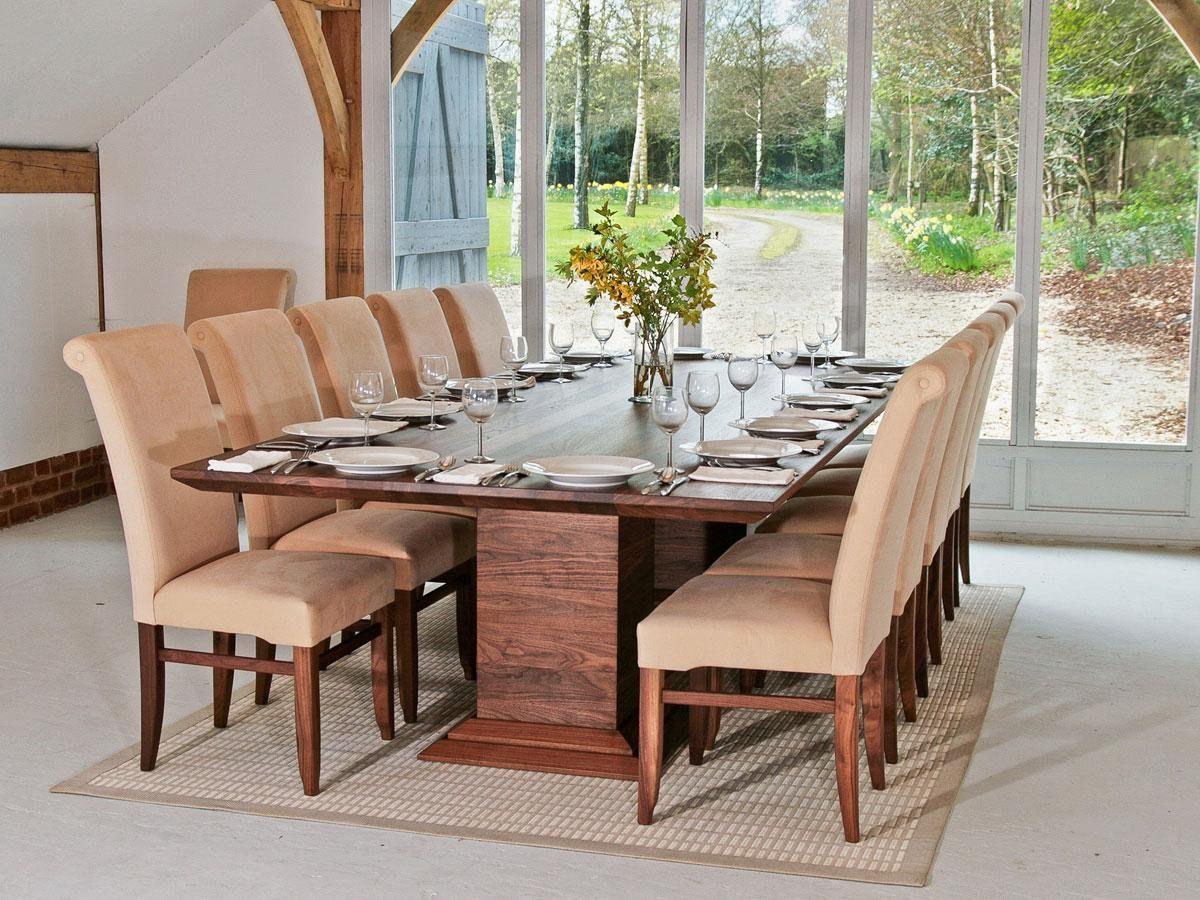
Are Extendable Dining Tables Worth It?
For many households, yes.
An extendable dining table is especially useful when there is a significant difference between the number of people you seat every day and the number you occasionally need to accommodate.
For example, a household of four may be perfectly comfortable with a 60-inch or 72-inch dining table most of the year. When relatives visit or everyone gathers for Thanksgiving, however, additional seating can quickly become important.
Instead of living with a very large table 365 days a year, an extendable table provides that extra capacity when needed.
An extendable table may be worth considering if:
- You regularly entertain family or friends.
- Your dining room has enough space for a larger table occasionally but you don't want that space occupied every day.
- Your household needs four to six seats most days but more seating for holidays and gatherings.
- You want flexibility as your household changes.
- You prefer one dining table that can handle both everyday meals and larger occasions.
A fixed-size dining table may be the better choice if you never need additional seating or if your room does not have enough clearance to use the table comfortably when extended.
The Most Important Measurement Is the Extended Size
One of the biggest mistakes when shopping for an extendable dining table is looking only at its closed dimensions.
If a table measures 72 inches long but extends to 96 inches, you need to determine whether your dining room can comfortably accommodate a 96-inch table.
The extra 24 inches have to go somewhere.
And table length is only part of the calculation. You also need room to pull chairs away from the table and space for people to walk behind occupied chairs.
As a general planning guideline, allow approximately 36 inches between the edge of the dining table and walls or other furniture. More space, around 42 to 48 inches, can make a busy dining area more comfortable, especially where people regularly walk behind seated guests.
For more detailed room-planning information, see our How to Choose the Right Dining Table Size guide.
A Simple Example
Suppose you are considering a table that measures:
72"L x 42"W
and extends to:
96"L x 42"W
The 72-inch configuration may fit your everyday dining space beautifully.
But before purchasing it, measure the room with the table at 96 inches. Then account for chairs and walking space around it.
If the 96-inch configuration makes the room difficult to navigate, the extension feature may not be as useful as it first appears.
Plan your room around the table at its largest size, not just the size you expect to use every day.
How Much Seating Does an Extension Leaf Add?
There is no universal rule because seating capacity depends on the width of the leaf, table design, chair width, table legs, and the overall shape of the table.
As a practical guideline, approximately 24 inches of table-edge space per person is comfortable for many dining arrangements.
That means adding a 20- to 24-inch leaf may often create room for approximately two additional diners, depending on where the seating is positioned.
However, don't rely solely on the advertised seating capacity.
Look at:
- The table's total extended length
- The width of your dining chairs
- Table-leg placement
- The location of pedestals or trestles
- Whether diners will be seated at the ends
- How much elbow room you prefer
Two tables of identical length can sometimes accommodate chairs differently because of their base designs.
Understanding the Different Types of Table Extensions
Not all extendable dining tables operate the same way.
Understanding the extension mechanism before purchasing can make a significant difference in everyday
convenience.
Removable Leaves
A traditional removable-leaf table separates or slides open so that one or more leaves can be inserted into the center.
This is a simple, proven design and can provide substantial additional table length.
The primary consideration is storage.
If the leaves do not store inside the table, you'll need a safe, dry location to keep them when they aren't being used.
Before purchasing, find out whether the leaves are self-storing or must be stored separately.
Butterfly Leaves
A butterfly leaf folds in the center and is typically stored underneath the tabletop.
When the table is extended, the leaf unfolds into position.
The major advantage is convenience: you don't have to find a closet or another room to store a large separate table leaf.
Butterfly leaves can be particularly attractive for households that extend and close their dining table frequently.
Self-Storing Leaves
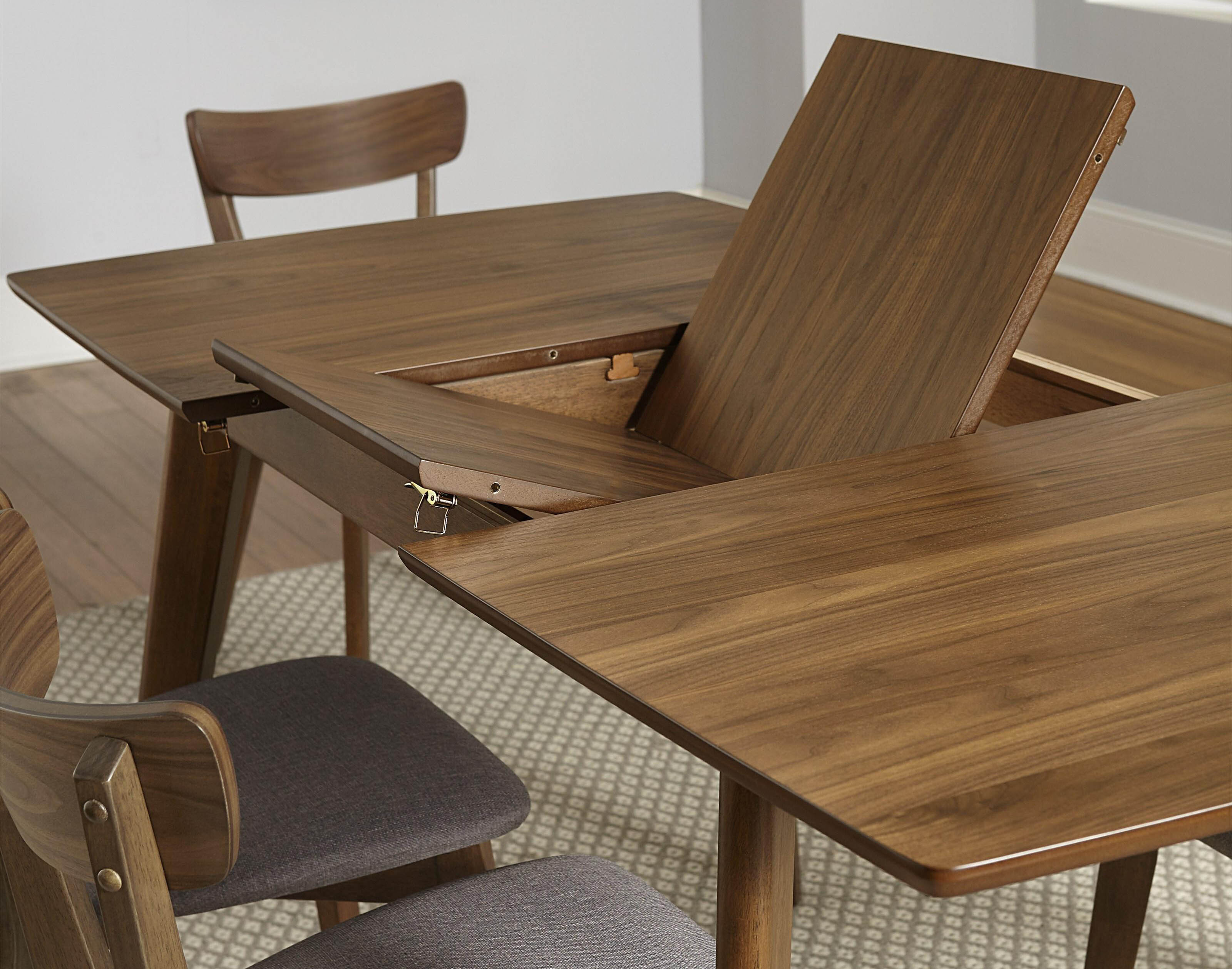
Some tables are designed so that their extension leaves store underneath the tabletop.
This can be one of the most convenient arrangements because the leaves remain with the table.
However, the exact mechanism varies by manufacturer and table design, so check the product specifications rather than assuming every extension leaf is self-storing
Drop-Leaf Tables
A drop-leaf table has hinged sections that hang vertically when not needed and are raised to increase the tabletop area.
These tables can work especially well in apartments, breakfast areas, kitchens, and other smaller spaces where conserving floor space is important.
They are somewhat different from traditional extension tables but serve the same basic purpose: providing more dining surface when needed.
One Leaf or Two Leaves?
Some extendable tables include a single leaf while others include two or more.
Multiple leaves provide another level of flexibility.
For example, a table might measure:
72 inches closed
90 inches with one leaf
108 inches with two leaves
That gives you three usable table sizes rather than simply small or large.
You may use the 72-inch configuration for everyday dining, add one leaf when a few guests visit, and use both leaves for a larger gathering.
For households that entertain groups of different sizes, this flexibility can be particularly useful.
Where Do You Store Removable Table Leaves?
This question is easy to overlook until the table arrives.
If the leaves are not self-storing, decide where you will keep them before purchasing the table.
A removable leaf should generally be stored flat and protected from excessive heat, moisture, and major changes in humidity.
Avoid locations such as damp garages or areas exposed to extreme temperature swings when possible.
Also consider the physical size and weight of the leaves. A large solid wood leaf may be awkward for one person to move, even if it is only used a few times per year.
If storage is limited, a butterfly or self-storing leaf system may be worth prioritizing.
Don't Forget About Table Legs and Pedestals
Table dimensions tell you how large the tabletop is. They don't always tell you how comfortable the seating will be.
The base matters.
A four-leg dining table may limit where chairs can be positioned, particularly when trying to squeeze an additional chair near a corner.
Trestle bases can create different seating limitations depending on the location of the supports.
Pedestal tables often provide greater flexibility around the perimeter because there are no corner legs, although the pedestal itself still affects legroom.
This becomes particularly important when the table is extended.
Before assuming that extending a table automatically means you can add a certain number of chairs, consider where those chairs will actually go.
Extendable Tables for Small Dining Rooms
An extendable table can be an excellent solution for a smaller dining room, but only when the room has enough temporary space for the expanded configuration.
The advantage is straightforward.
You can keep the table compact most of the time, preserving walking space and making the room feel more open. When guests arrive, the table can expand temporarily.
Round and oval extendable tables can also be worth considering in tighter spaces because their shapes may improve traffic flow around the table.
However, extension mechanisms and shapes vary considerably. Always compare both the closed and fully extended dimensions with your actual room.
Extendable Tables for Large Families and Entertaining
The benefits become even clearer for households that regularly host larger groups.
Instead of placing a folding table next to the dining table or separating guests into different rooms, an appropriately sized extendable table may allow more people to sit together.
For frequent entertaining, look beyond maximum seating capacity.
Consider how easily the table extends. If adding the leaves is cumbersome and requires moving a very heavy table every time, you may be less inclined to use the feature.
A good extension system should make transitioning between everyday dining and entertaining reasonably straightforward.
Will an Extendable Table Be as Strong as a Fixed Table?
A well-made extendable dining table can be sturdy and durable.
The fact that a table extends does not automatically make it less stable.
Construction quality matters much more.
Look at the quality of the extension mechanism, table base, hardware, joinery, and materials. When extended, the tabletop should feel properly supported rather than unstable or excessively flexible.
As with any piece of furniture, quality varies between products.
Solid Wood Extendable Dining Tables
Solid wood is a popular choice for extendable dining tables because of its durability, appearance, and ability to work with many decorating styles.
Wood also develops character over time, which can be part of its appeal.
Keep in mind that wood naturally responds to changes in humidity. Slight expansion and contraction are normal characteristics of real wood furniture.
When removable leaves are stored separately for extended periods, keeping them in reasonably similar environmental conditions to the table can help minimize differences caused by humidity and temperature.
What About the Grain and Finish When the Table Is Extended?
With some dining tables, adding a leaf changes the visual continuity of the tabletop.
Wood grain may not align perfectly between the table and extension leaves, and slight differences in color can develop over time, particularly if the table is regularly exposed to sunlight while a separately stored leaf is not.
This does not necessarily indicate a defect. It can be a natural characteristic of wood furniture.
If visual continuity is especially important to you, examine product photographs showing the table both closed and extended whenever available.
How Often Will You Actually Extend the Table?
This is a useful question to ask before paying for a feature you may never use.
Think about your real lifestyle rather than an imagined future dinner party.
If your household seats four people every day and perhaps eight people five or six times a year, an extendable table makes considerable sense.
If you never entertain and have no expectation of needing additional seating, a fixed table may offer everything you need with fewer moving parts.
On the other hand, even occasional use can justify an extension table if it eliminates the need for another table or solves a recurring problem during holidays.
Extendable vs. Fixed Dining Tables
Consideration Extendable Table Fixed Table
Everyday footprint Can remain smaller Always the same
Extra seating Excellent flexibility Limited to table size
Entertaining Very practical May require another table
Moving parts Yes No
Leaf storage Sometimes required Not applicable
Room planning Must consider extended size Simpler
Flexibility Excellent Limited
Best for Changing seating needs Consistent seating needs
Neither design is inherently better. The right choice depends on your room and how you actually use your dining table.
Before You Buy: An Extendable Dining Table Checklist
Before ordering an extendable dining table, check the following:
Closed dimensions:
Will the everyday size fit comfortably in your dining area?
Fully extended dimensions:
Will the room still function when the table is at maximum length?
Seating capacity:
How many people can realistically sit around the table with your preferred chair size?
Extension type:
Does the table use removable, butterfly, drop, or self-storing leaves?
Leaf storage:
If the leaves are removable, where will you keep them?
Table base:
Will legs, pedestals, or trestles interfere with additional chairs?
Clearance:
Is there enough space to pull chairs out and walk behind seated guests?
Frequency of use:
How often are you likely to extend the table?
These questions are often more important than simply asking how many people the manufacturer says the table can seat.
Final Thoughts: Is an Extendable Dining Table Right for You?
An extendable dining table makes the most sense when your everyday seating needs and occasional seating needs are different.
It allows you to enjoy a dining table that fits your room comfortably most of the time without giving up the ability to accommodate additional guests.
The key is choosing based on the table's fully extended dimensions, not just its everyday size.
Measure your room. Consider chair clearance. Look at the table base. Understand how the leaves operate and where they are stored.
If all of those pieces work together, an extendable dining table can be one of the most practical pieces of furniture in your home.
Frequently Asked Questions
How much space should I leave around an extendable dining table?
Approximately 36 inches between the table edge and a wall or other furniture is a useful minimum planning guideline. Around 42 to 48 inches provides more comfortable circulation in areas where people regularly walk behind occupied chairs.
How many people can an extension leaf add?
It depends on the leaf width, table design, chair width, and base placement. A leaf of approximately 20 to 24 inches may often provide space for about two additional diners, but always check the table's actual dimensions and seating configuration.
Do extension leaves store inside the table?
Some do and some don't. Butterfly and self-storing leaves are designed to remain with the table, while traditional removable leaves may require separate storage. Check the individual product specifications.
What is a butterfly leaf dining table?
A butterfly leaf folds in the center and typically stores underneath the tabletop. It unfolds when the table is extended, eliminating the need to store a separate full-size leaf elsewhere.
Are extendable dining tables good for small spaces?
They can be. An extension table allows you to maintain a smaller footprint for everyday use while creating additional seating when needed. The room still needs enough space to accommodate the table safely and comfortably when fully extended.
Should I buy an extendable or fixed dining table?
Choose an extendable table if your seating needs regularly change. A fixed table may be preferable if you consistently seat the same number of people and don't anticipate needing additional dining space.